Seasonal Rainfall Patterns and Their Ties to Deposit Timing in Cross-Continental Mobile Gaming Networks
Mapping Rainfall Cycles to User Activity
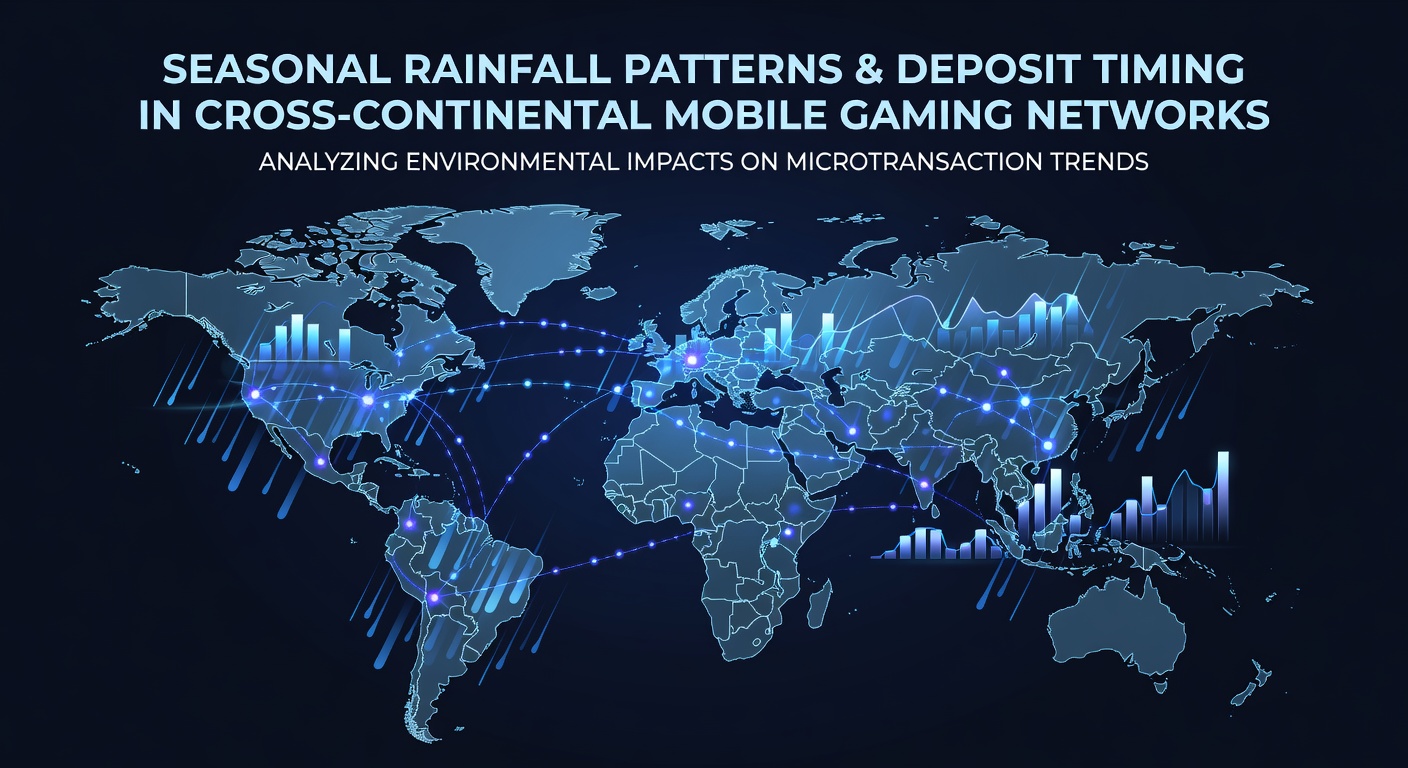
Seasonal rainfall creates measurable shifts in how people interact with mobile gaming platforms across different continents, and data from network operators shows these weather patterns often align with changes in deposit timing. In regions experiencing monsoons or extended wet seasons, users tend to adjust their online activity windows because heavy precipitation affects both connectivity reliability and daily routines, which in turn influences when deposits occur on gaming networks.
Researchers tracking cross-continental data have observed that rainfall intensity correlates with peak deposit periods in several key markets. For instance, during the June-to-September monsoon window in South Asia, mobile deposit volumes frequently rise in the evening hours once storms subside, whereas in parts of sub-Saharan Africa the pattern shows increased morning deposits following overnight rains that keep users indoors. These shifts appear consistently across multiple years of aggregated transaction records from operators serving diverse geographic zones.
Network Performance During Wet Periods
Mobile networks experience variable strain when rainfall intensifies, and this infrastructure response directly affects deposit processing times. Signal attenuation from heavy rain can slow data transmission, prompting users to complete transactions during clearer intervals. Observers note that operators in Southeast Asia and northern Australia report similar latency spikes during peak wet months, leading players to time their deposits for periods of improved connectivity.
Data indicates that deposit attempts often cluster shortly after rainfall events rather than during them. In South American markets, where seasonal rains from November through March coincide with major gaming events, transaction logs reveal a consistent post-storm surge between 8 PM and midnight local time. This timing allows networks to recover bandwidth and gives users stable connections for completing deposits linked to in-game features.
Regional Examples and 2026 Observations
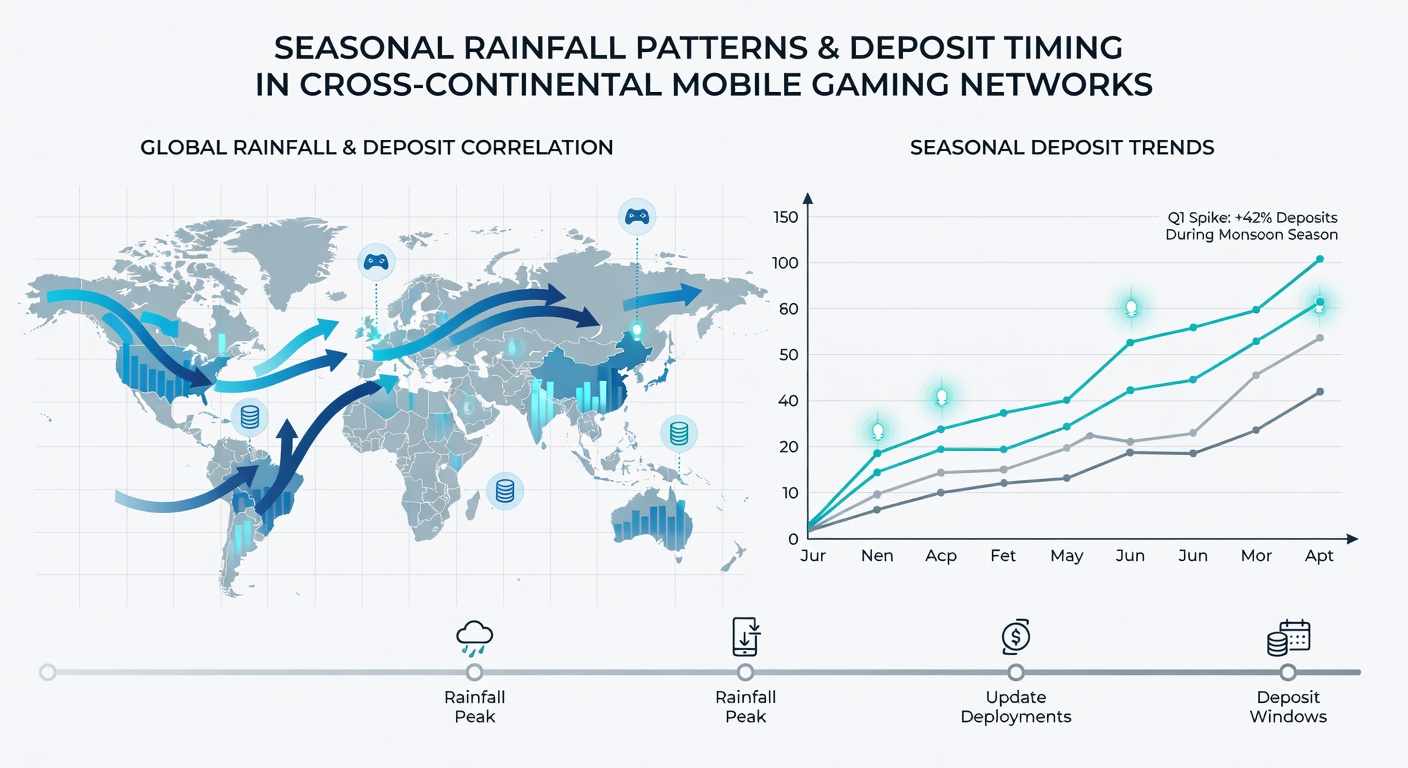
Patterns documented through May 2026 highlight how these correlations hold across continents. In East Africa, the long rains season from March to May produced noticeable spikes in afternoon deposits on days when precipitation exceeded 20 millimeters, according to aggregated operator metrics. Similar alignments appeared in the Pacific Northwest of North America during spring showers, where users shifted deposits to midday slots when weather cleared.
Industry reports from regulatory bodies in Australia and Canada show parallel trends. The Australian Communications and Media Authority has published network performance statistics that link wet season disruptions to altered user behavior patterns, while Canadian gaming oversight data reveals comparable timing adjustments during regional rainfall events. These sources demonstrate that the relationship between precipitation and deposit windows transcends single markets and reflects broader infrastructure and behavioral responses.
Infrastructure Adaptations and User Responses
Operators have implemented adaptive routing and localized caching to mitigate rainfall-related slowdowns, yet deposit timing still follows weather rhythms in many areas. Users in monsoon-affected zones frequently monitor local forecasts before initiating transactions, creating predictable clusters that align with breaks in precipitation. This behavior emerges consistently in transaction heatmaps compiled from networks spanning Asia, Africa, and the Americas.
Studies from academic institutions examining mobile usage data confirm that rainfall volume serves as a reliable predictor for shifts in deposit frequency and timing. One analysis of multi-year records found that a 30 percent increase in daily rainfall corresponded with a measurable redistribution of deposit activity toward evening hours in tropical and subtropical regions. These findings hold after controlling for time zone differences and holiday calendars, pointing to weather as a distinct influencing factor.
Conclusion
Seasonal rainfall patterns continue to shape deposit timing within cross-continental mobile gaming networks through their effects on connectivity and user availability. Records from operators and regulatory sources demonstrate consistent correlations across continents, with deposits clustering around periods of improved network conditions following rain events. As infrastructure evolves and data collection expands, these weather-linked patterns remain a measurable component of transaction dynamics in mobile gaming environments.