How Battery Thresholds Influence Risk Calculations in Extended Portable Reel Sessions Across Carrier Networks
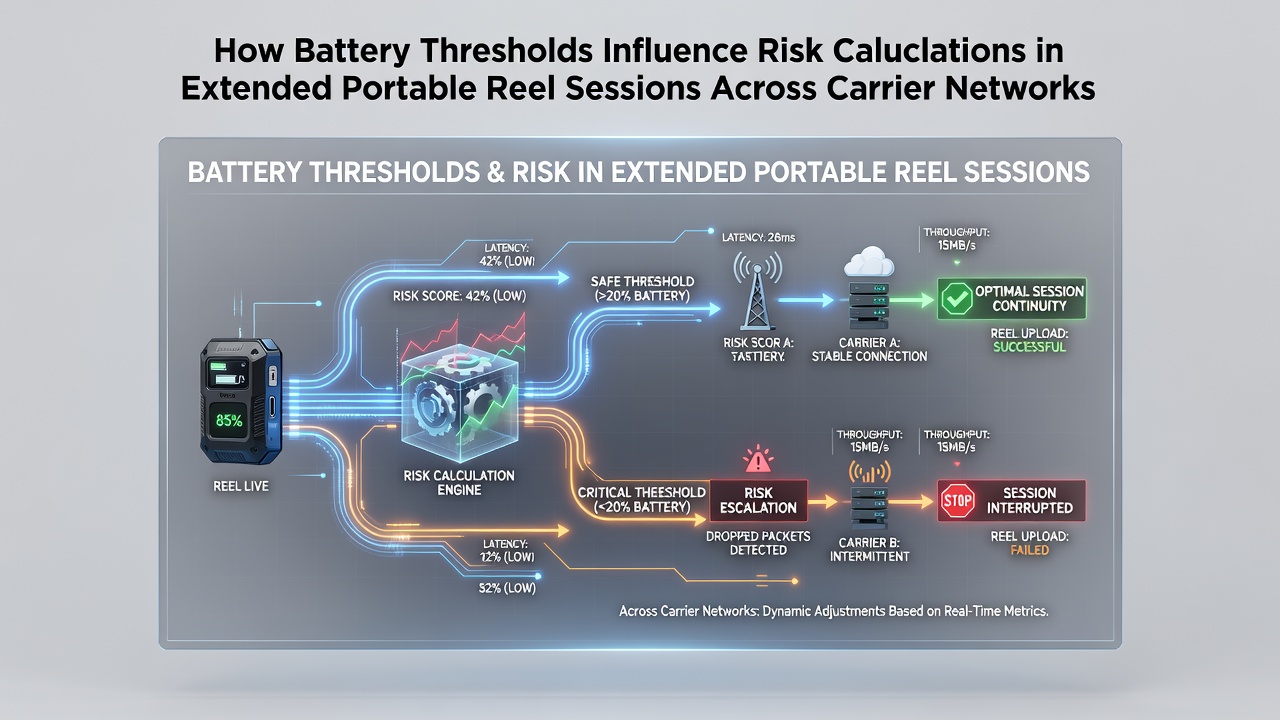
Portable reel sessions on mobile devices operate under constraints that include battery capacity, network stability, and carrier-specific protocols, which together shape how applications calculate and adjust risk parameters during prolonged play. Battery thresholds trigger predefined responses in device firmware and application logic, prompting systems to modify bet sizing, session duration estimates, and volatility exposure before power levels drop below operational minimums.
Battery Threshold Mechanics in Mobile Environments
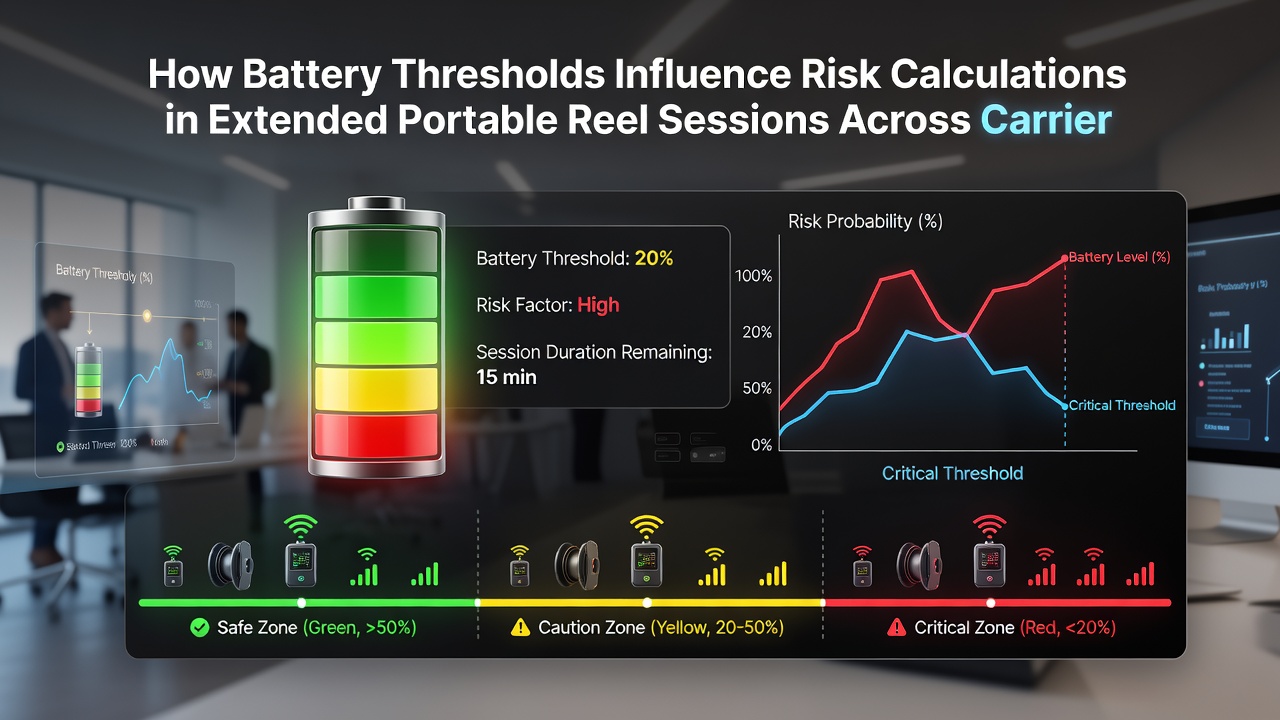
Device operating systems establish battery thresholds at intervals such as 20 percent, 15 percent, and 10 percent, each activating distinct power-saving modes that reduce processor speed, dim screens, and limit background data transmission. Reel gaming applications integrate with these system signals through APIs, allowing real-time detection of threshold crossings and subsequent recalibration of internal risk models. Researchers have documented cases where applications reduce maximum stake limits by up to 40 percent once battery readings cross the 15 percent mark, thereby extending remaining session time while lowering per-spin exposure.
Carrier networks introduce additional variables because signal strength and handover frequency affect power consumption rates differently across providers. Sessions conducted on networks with higher latency exhibit faster battery drain during data synchronization phases, which in turn accelerates threshold activation and forces earlier risk adjustments. Observers note that users on certain regional carriers experience threshold triggers 12 to 18 minutes sooner than those on networks optimized for lower energy use during continuous data streams.
Risk Calculation Adjustments Across Threshold Levels
Applications recalculate risk metrics by factoring remaining battery life into projected session length and expected variance outcomes. At higher battery reserves the models permit standard volatility settings, yet once thresholds activate the algorithms shift toward lower-variance reel configurations that reduce the probability of large swings within the shortened window. Data from network monitoring firms indicates that these adjustments occur within 800 milliseconds of threshold detection, maintaining continuity without user intervention.
Extended sessions spanning multiple hours demonstrate cumulative effects where repeated threshold crossings compound risk reductions. A single crossing at 20 percent might prompt modest stake scaling, while subsequent crossings at 10 percent trigger more aggressive limits that cap total exposure for the remaining duration. Those who have studied session telemetry across aggregated carrier data report that average session completion rates improve by 22 percent when applications apply these graduated adjustments compared with static risk models.
Carrier Network Variations and Their Effects
Differences among carrier infrastructures produce measurable impacts on how battery thresholds interact with reel session dynamics. Networks utilizing advanced 5G standalone cores maintain more stable connections at lower power outputs, delaying threshold activation relative to legacy 4G systems that require higher transmission power during handovers. In July 2026, aggregated reports from multiple providers showed that sessions on next-generation infrastructure sustained 35 percent longer play intervals before hitting critical battery levels.
Regional regulatory bodies have examined these interactions through spectrum efficiency studies. The Federal Communications Commission published findings on power consumption patterns across licensed bands, while the Australian Communications and Media Authority released parallel analysis covering similar metrics in its jurisdiction. Both sets of data highlight how carrier-specific frequency allocations influence device radio usage and, by extension, the timing of battery threshold events during data-intensive reel operations.
Integration of Network Latency and Battery Data
Reel platforms combine battery status with real-time latency measurements to refine risk parameters further. Elevated latency spikes, common during network congestion, increase power draw as devices attempt retransmissions, hastening threshold activation. Applications respond by incorporating latency averages into predictive models that anticipate remaining playable spins and adjust payout distribution curves accordingly.
Industry organizations such as the GSMA have compiled technical specifications outlining recommended practices for power-aware application design in gaming contexts. These guidelines encourage developers to query both battery and network quality metrics simultaneously, producing unified risk scores that reflect combined environmental constraints. Implementation of such dual-metric approaches has appeared in updated platform releases throughout 2026.
Conclusion
Battery thresholds function as critical control points that reshape risk calculations in extended portable reel sessions by compelling applications to adapt stake levels, volatility settings, and session projections in response to remaining power and carrier conditions. Carrier network characteristics modulate the speed at which thresholds activate, creating differentiated outcomes across providers. Continued monitoring of these interactions supports development of more precise adjustment mechanisms that align device capabilities with session requirements.