Currency Flux Patterns Linking Exchange Swings to Layered Reward Builds in Worldwide Slot Networks

Currency fluctuations create measurable shifts in how online slot platforms structure their multi-tier reward systems across international markets, and data from major financial monitoring bodies tracks these movements through 2026. Exchange rate volatility between major currencies such as the US dollar, euro, and Australian dollar directly influences the conversion rates applied to player deposits, which in turn determines the rate at which bonus layers accumulate in progressive and tournament-based slot networks.
Operators maintain separate ledgers for each supported currency while applying real-time forex feeds to normalize contributions toward shared jackpot pools and loyalty milestones. When the euro strengthens against the dollar by more than 2 percent within a single trading session, platforms registered in the European Union automatically recalibrate the bonus accrual formulas for euro-denominated accounts, which produces faster progression through the lower reward tiers for players using that currency.
Exchange Rate Data and Platform Adjustments
Figures released by the European Central Bank in July 2026 documented an average daily volatility range of 1.8 percent across G10 currencies, and gaming aggregators responded by updating their internal conversion engines twice daily rather than once. These adjustments maintain parity in how deposit amounts translate into reward points, yet they also create short windows where players depositing in a strengthening currency receive slightly accelerated access to mid-level bonus features before the next recalculation occurs.
Research from the Monetary Authority of Singapore indicates that platforms serving the Asia-Pacific region experienced a 14 percent increase in cross-currency deposit volume during the first half of 2026, which coincided with wider spreads between the Singapore dollar and the Japanese yen. Slot networks responded by expanding the number of intermediate reward layers available to accounts that switch currencies mid-session, allowing operators to retain player engagement even when exchange rates move unfavorably for one denomination.
Layered Reward Mechanics Across Networks
Worldwide slot networks typically organize rewards into four to six stacked tiers, each requiring a specific volume of normalized deposit value before unlocking the next stage. Currency flux enters the equation through the normalization step, where the platform converts every incoming transaction to a base unit before adding it to the player's cumulative total. When the Australian dollar weakened steadily through June and July 2026, operators observed that Australian players needed larger nominal deposits to reach the same tier thresholds, which prompted several networks to introduce temporary currency-specific multipliers for that market.
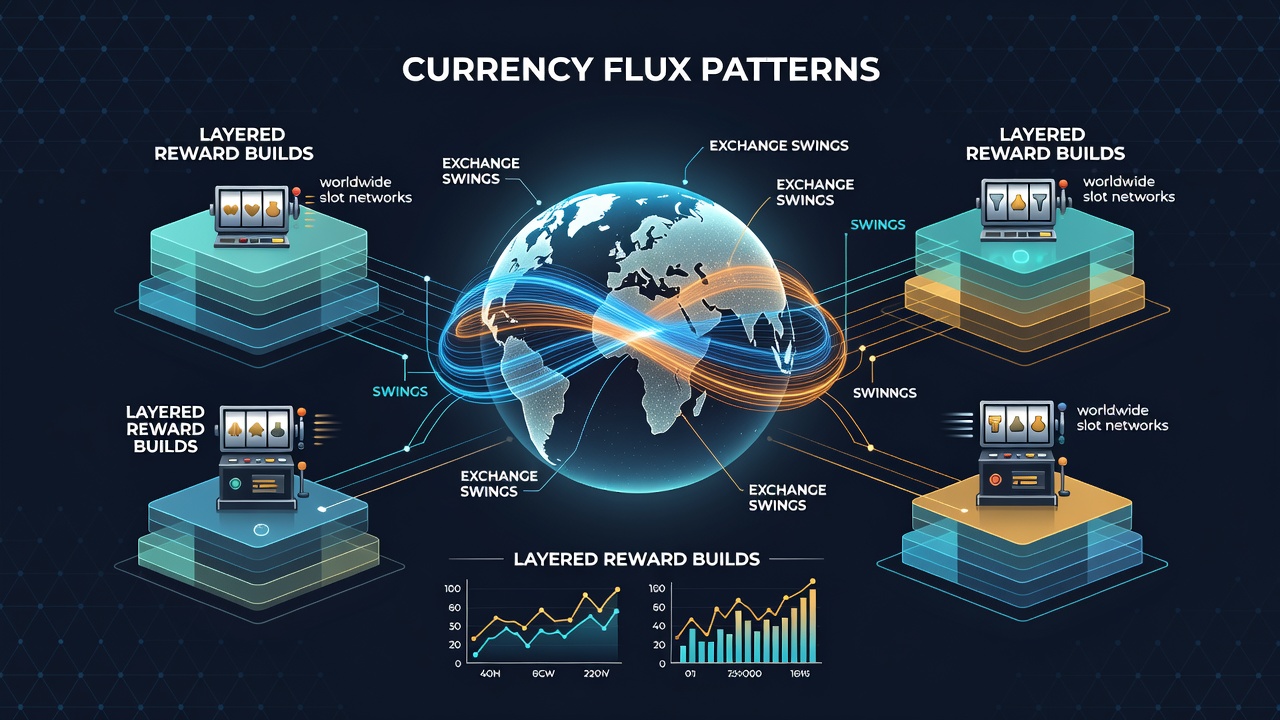
Those multipliers function as temporary bridges that stabilize progression speed without altering the underlying global jackpot formulas. Observers at the Canadian Gaming Association have noted similar patterns during periods of Canadian dollar movement against the US dollar, where platforms serving Canadian players added an extra intermediate tier rather than adjusting the final jackpot contribution rate.
Geographic Variations in Implementation
European operators tend to absorb minor exchange swings within their existing tier structure by widening the point ranges required for advancement, while North American platforms more frequently introduce new temporary layers. Data compiled by the National Council of Legislators from Gaming States shows that US-facing networks introduced 23 new currency-adjusted reward layers between January and July 2026, compared with 11 new layers rolled out by EU operators during the same period. The difference reflects regulatory preferences for transparency in bonus terms rather than any fundamental variation in how exchange data is processed.
Platforms using aggregated game libraries from multiple providers must also synchronize reward calculations across different backend systems, each of which may apply its own forex buffer. When one provider updates its conversion table several hours ahead of another, players depositing through the slower provider can experience a brief lag in tier progression, an effect documented in transaction logs shared among members of the European Gaming and Betting Association.
Technical Synchronization and Monitoring
Real-time monitoring tools now track both forex feeds and reward tier completion rates simultaneously, allowing operators to detect when a currency swing begins to skew progression statistics for any single geographic cohort. These tools trigger automated alerts once the deviation exceeds a predefined threshold, at which point the platform either adjusts the affected multipliers or temporarily pauses new deposits from that currency until rates stabilize. Such measures keep the layered reward builds consistent across the worldwide network while complying with local financial reporting requirements.
Conclusion
Currency flux patterns continue to shape the architecture of layered reward systems in global slot networks through ongoing adjustments to conversion rates, tier thresholds, and temporary multipliers. Regulatory bodies in multiple regions publish volatility data that operators incorporate directly into their platform logic, producing observable differences in how quickly players advance through bonus stages depending on the currencies they use. These mechanisms remain in active development as networks balance technical synchronization requirements with regional market conditions throughout 2026 and beyond.