Analyzing Voice Command Adoption Trends in Live Dealer Platforms Across Different Age Groups
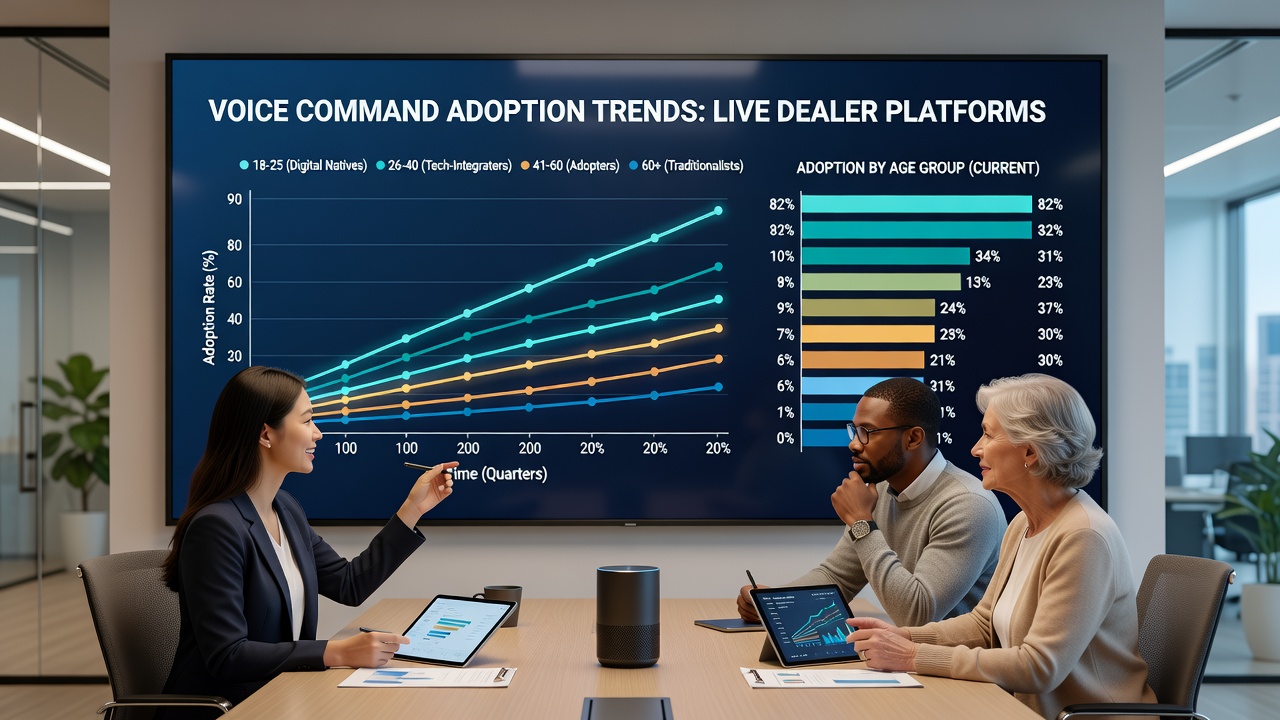
Voice command features have moved from novelty to standard option in many live dealer environments where players interact with real-time tables through microphones on their devices. Data collected through platform analytics shows measurable differences in how various age cohorts engage with spoken instructions for actions like placing bets, requesting cards, or signaling decisions at blackjack and roulette tables. Researchers tracking these patterns note that adoption correlates strongly with familiarity with voice assistants in daily routines rather than with gambling experience alone.
Current Landscape of Voice Integration
Live dealer platforms began rolling out voice recognition tools more widely after 2023, and by June 2026 several major operators reported that between 18 and 27 percent of active mobile sessions included at least one spoken command per hour of play. These systems rely on natural language processing trained on gaming terminology, which allows phrases such as “double down” or “split the eights” to trigger the correct dealer response without requiring on-screen taps. Industry reports indicate that accuracy rates for English-language commands now exceed 92 percent on average, with lower figures recorded for accented speech or background noise common in public settings.
Age-Based Adoption Patterns
Players aged 18 to 34 demonstrate the highest integration of voice commands, with session data revealing that roughly 41 percent of this group activates the feature during their first three visits to a voice-enabled table. The same cohort tends to combine voice input with occasional manual overrides, especially when confirming large wagers. In contrast, individuals between 35 and 54 show moderate uptake around 24 percent, often limiting spoken commands to simple actions while reserving complex strategy decisions for touch interfaces.
Those aged 55 and older register the lowest adoption figures, hovering near 9 percent in aggregated platform statistics released through mid-2026. Observers attribute this gap partly to longer-established habits of physical button presses developed during earlier online gaming eras. One longitudinal study conducted across North American and European operators found that users over 55 who did try voice commands maintained usage for an average of 2.8 sessions before reverting to manual controls, whereas younger participants sustained the behavior across 7.1 sessions on average.
Regional and Platform Variations
North American markets, particularly those regulated under frameworks in New Jersey and Pennsylvania, have seen faster rollout of voice tools compared with certain Asian jurisdictions where regulatory approval cycles extend further. Data compiled by the New Jersey Division of Gaming Enforcement shows a 31 percent quarter-over-quarter increase in voice-enabled table traffic between January and June 2026. European platforms, meanwhile, report steadier but slower growth, influenced by stricter data privacy rules affecting microphone permissions.

Device type also plays a role. Smartphones equipped with always-on voice assistants record higher command success rates than tablets or laptops fitted with external microphones. A 2025 white paper from the Canadian Gaming Association documented that iOS users across all age brackets activate voice features 14 percent more frequently than Android users, citing differences in default permission settings and speech-to-text engine performance.
Influencing Factors and Barriers
Privacy concerns surface repeatedly in surveys distributed by platform operators, with 37 percent of respondents across age groups expressing hesitation about microphone access even when the feature remains optional. Background noise interference and the need for clear enunciation represent additional technical hurdles, particularly for players in shared living spaces. Educational pop-ups that demonstrate command phrasing have lifted first-time usage by 11 percentage points in A/B tests conducted by two major aggregators during spring 2026.
Accessibility considerations appear in regulatory filings from multiple jurisdictions. Voice commands provide an alternative input method for individuals with motor impairments, yet current implementations still require sighted confirmation of bet amounts in most systems. Developers continue refining audio feedback loops that announce wager totals and table minimums without visual reliance.
Conclusion
Tracking voice command adoption across age groups reveals distinct behavioral clusters shaped by prior technology exposure, regional infrastructure, and device characteristics. Continued refinement of speech recognition models and expanded regulatory guidance will likely influence how these trends evolve through the remainder of 2026 and beyond. Platform operators monitoring session logs report that incremental improvements in accuracy and privacy controls correspond with gradual uptake even among previously resistant demographics.